Who the $?#% am I?
Florian Haas
florian@hastexo.com


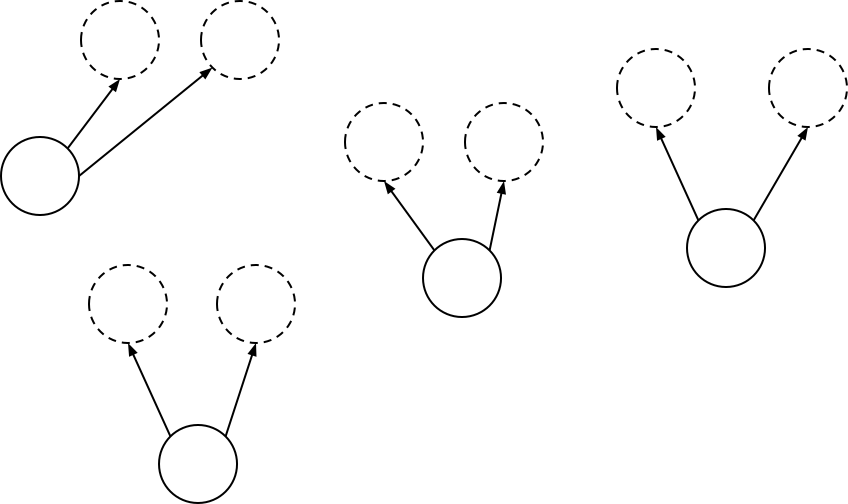
Native Object Storage
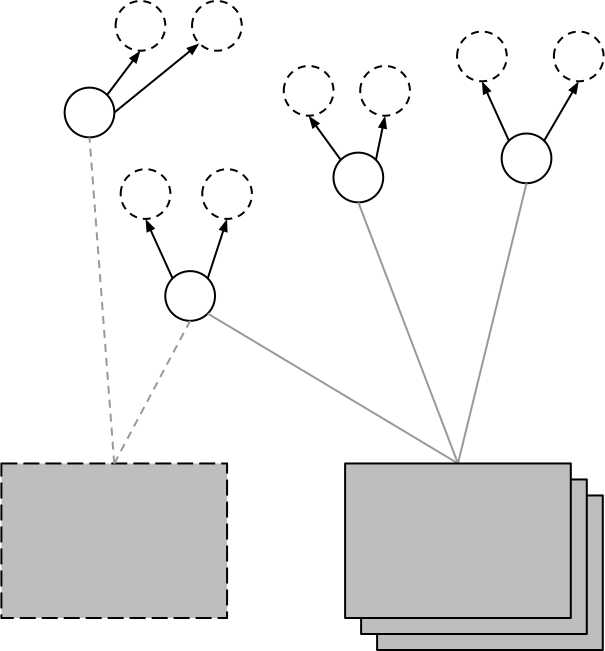
Block Storage
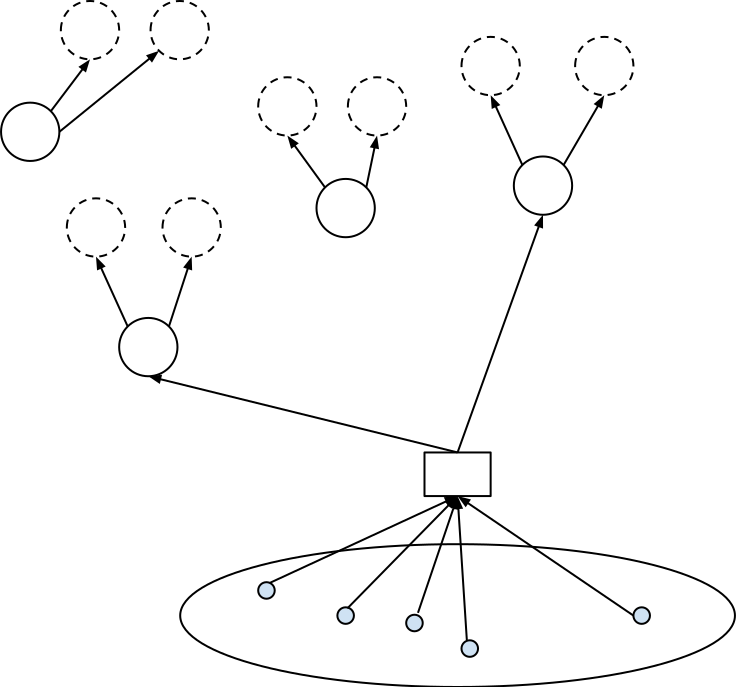
ReSTful Storage
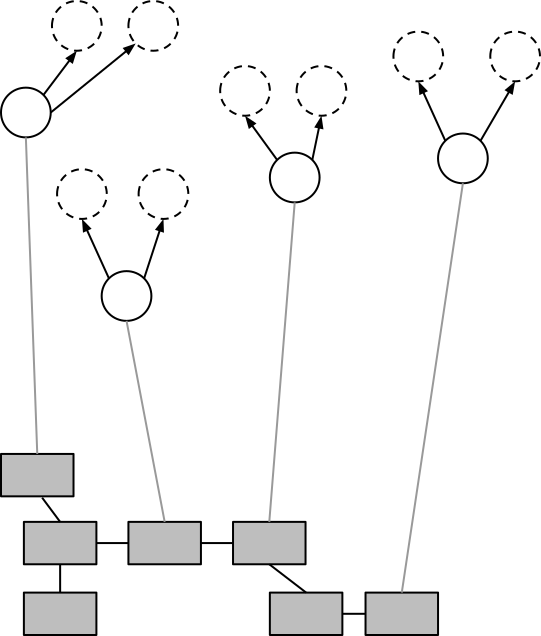
Distributed Filesystem
Ceph is based on a distributed, autonomic, redundant native object store named RADOS.
Reliable
Autonomic
Distributed
Object
Store
RADOS is a flat namespace.
Each object has a name, any number of attributes, and a payload of (almost) arbitrary size.
Objects are assigned to Placement Groups (PGs).
Each PG has an ordered list of Object Storage Devices (OSDs) where its contents are stored in a redundant fashion.
Object placement is entirely algorithmic.
There is no central lookup or distributed hashtable.
Now what is so special about that?



Front desk, key card: central data lookup (with caching)
Works just fine for a small hotel.
What if our hotel is huge?
We could add more front desks, and hire more people.

Doesn't work too well.
We could also build several identical buildings, and assign guests on a pseudo-random basis.

Several buildings, random assignment: distributed, partitioned hashtable
But what if our hotel was
gigantic?
Like, a billion rooms?
Room numbers? Meaningless.
# 156,398,481
Is your room even still there?
What are the odds that it's on fire, right now?
Remember:
at scale, something always fails.
What we really need is:
(1) Something you already know about yourself

Photo credit: Sean Hagen (rebelcan) CC-BY 2.0
(2) A system that takes that information and automatically guides you to your room.
So you no longer care where your room is.

(3) Robots that automatically move all your stuff when you can't enter your room.
Think housekeeping.
(4) Magic replicating minions that duplicate all your things and store them safely, elsewhere as soon as you've entered your room.
Because you don't want to lose them in a fire.
And Ceph does exactly that for you.
All of it.
Controlled
Replication
Under
Scalable
Hashing
All OSDs know about and can propagate the current map describing object placement.
Monitor servers (MONs) arbitrate the cluster status and act as authorities for the placement map.
They use a distributed consensus protocol based on Paxos.
Both MONs and OSDs operate entirely in user space.
Enough talk.
Let's take a look.
daisy
eric
frank
Applications can interact with RADOS using a number of APIs.
There are also several high-level client layers that RADOS ships with.
RADOS Block Device (RBD) is a thin‑provisioned block device interface that stripes data across multiple RADOS objects.
It supports cheap, read‑only redirect‑on‑write snapshots.
RBD also supports efficient cloning.
This makes it very well suited for maintaining template-based virtual machines.
RBD comes in two flavors.
rbd is a kernel-level block device driver merged upstream in Linux 2.6.37.
qemu-rbd is a userspace storage driver for Qemu and KVM.
It is built on the librados C API.
Again, let's take a peek.
alice
daisy
Ceph provides ReSTful HTTP(S) access to the object store.
It does so through a FastCGI application, radosgw.
radosgw uses the libradospp C++ API.
radosgw runs in any web server that supports FastCGI.
The canonical deployment approach is with Apache and mod_fastcgi.
radosgw currently understands the Amazon S3 and OpenStack Swift APIs.
radosgw supports native load balancing and scaleout.
Aaaaaaand... you know what's next.
alice
bob
charlie
And now.
Yeah, you've been waiting for this. I know.
ceph is a distributed filesystem built on top of RADOS.
It's been in the mainline kernel since 2.6.32.
Its goal:
An HPC filesystem similar to Lustre, without its shortcomings.
ceph layers POSIX semantics on top of RADOS.
It introduces directories, attributes, permission bits and everything else that a POSIX filesystem needs.
All filesystem metadata lives itself in RADOS objects.
Ceph uses another type of daemon, a metadata server (MDS), to manage this metadata.
Just like all other Ceph daemons, the MDS runs entirely in userspace.
Only the filesystem client runs in the kernel.
ceph mounts are writable from
any client and play nicely with
flock() and fcntl() locking.
ceph supports arbitrary directory
level snapshots.
reflink() is currently unsupported.
ceph also has spiffy
accounting and statistics support
through virtual extended attributes.
And here will be my final demo for the day...
alice
bob
charlie
That's it!
Admit it, you're geeked out now.
If you're not, you have no soul.
Thanks to:
Sage Weil @liewegas & crew for Ceph
Bartek Szopka @bartaz for impress.js
Markus Gutschke for shellinabox (and his recipe collection!)
Inktank @inktank for the Ceph logo